



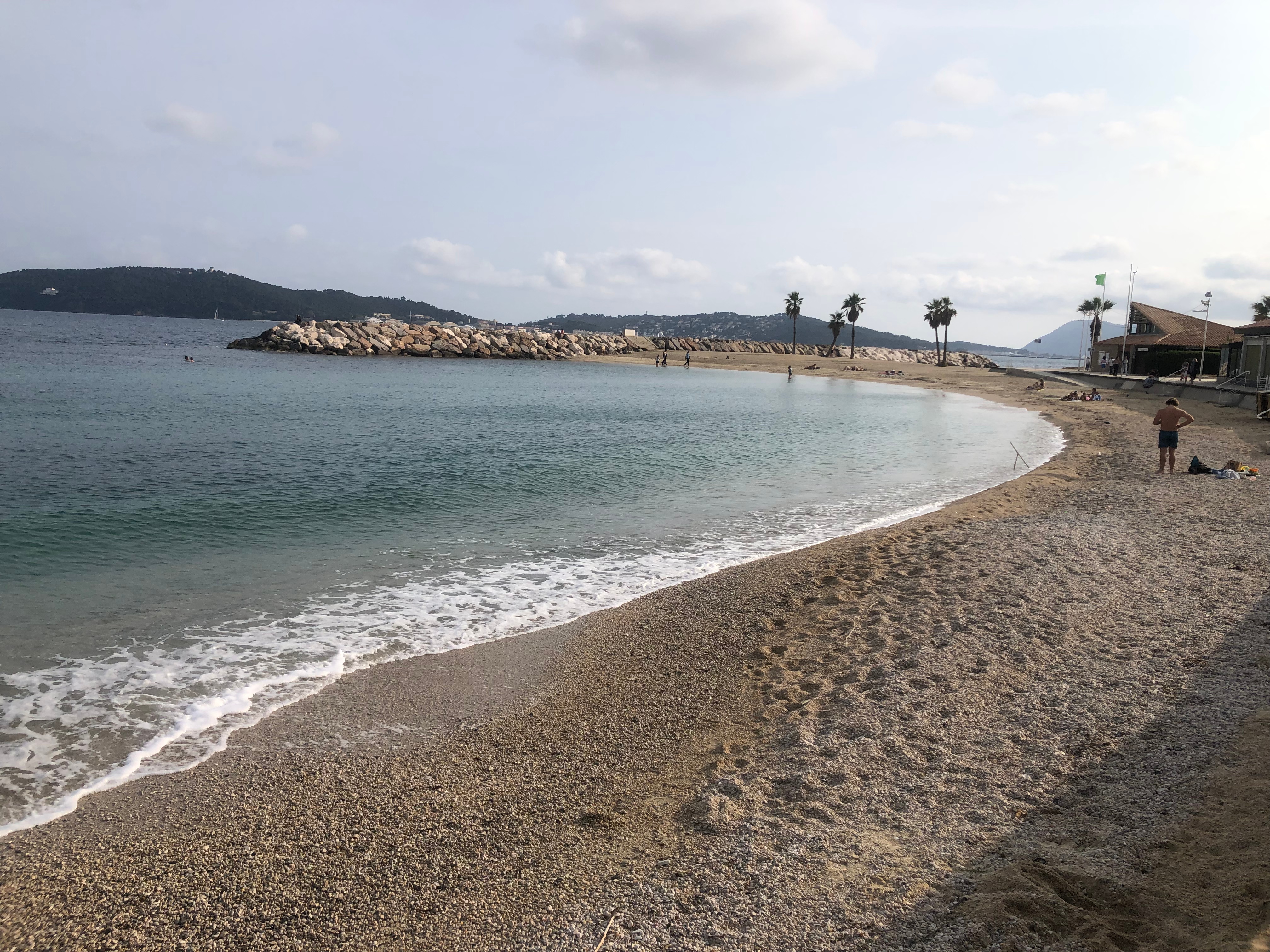
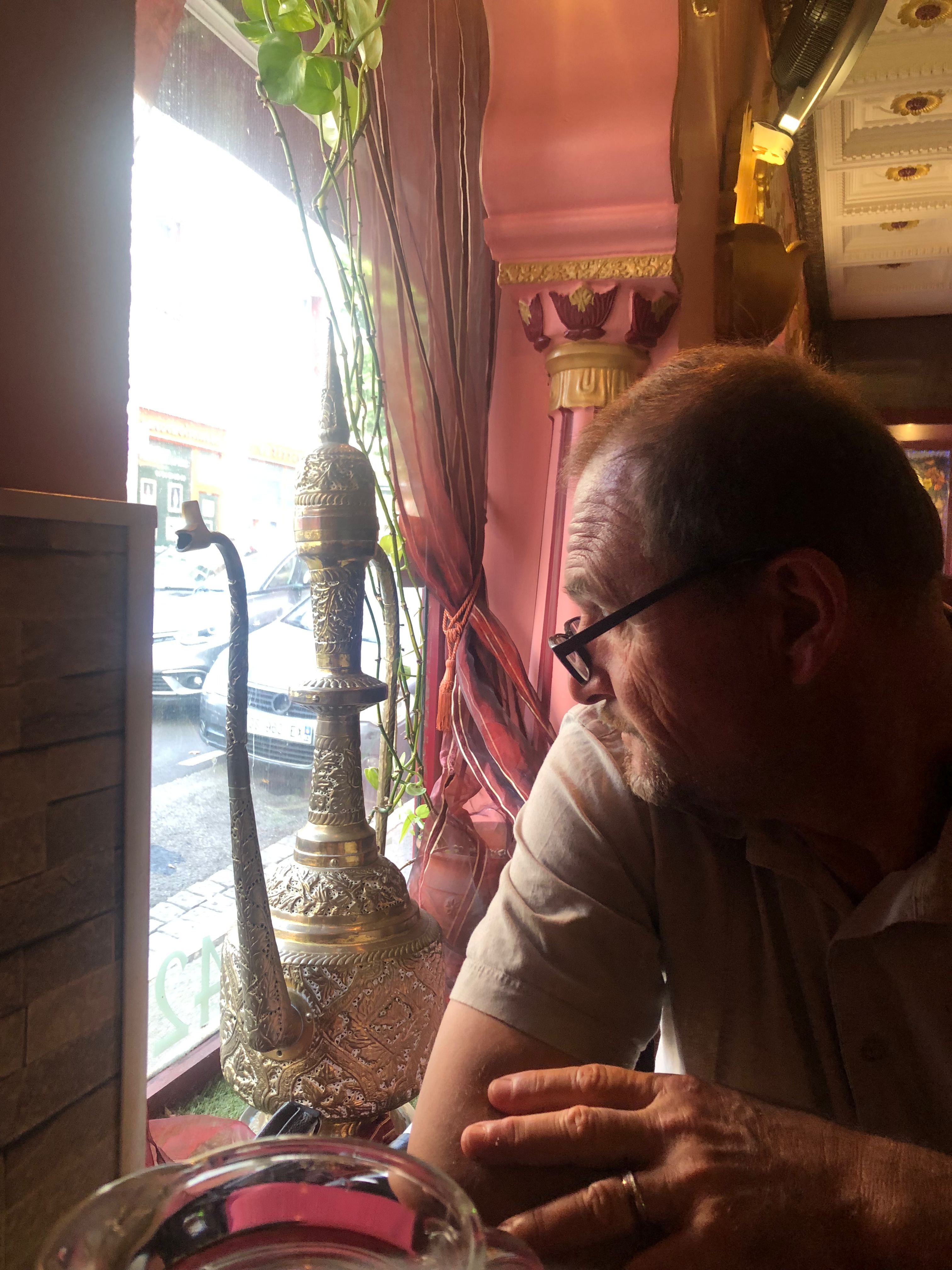



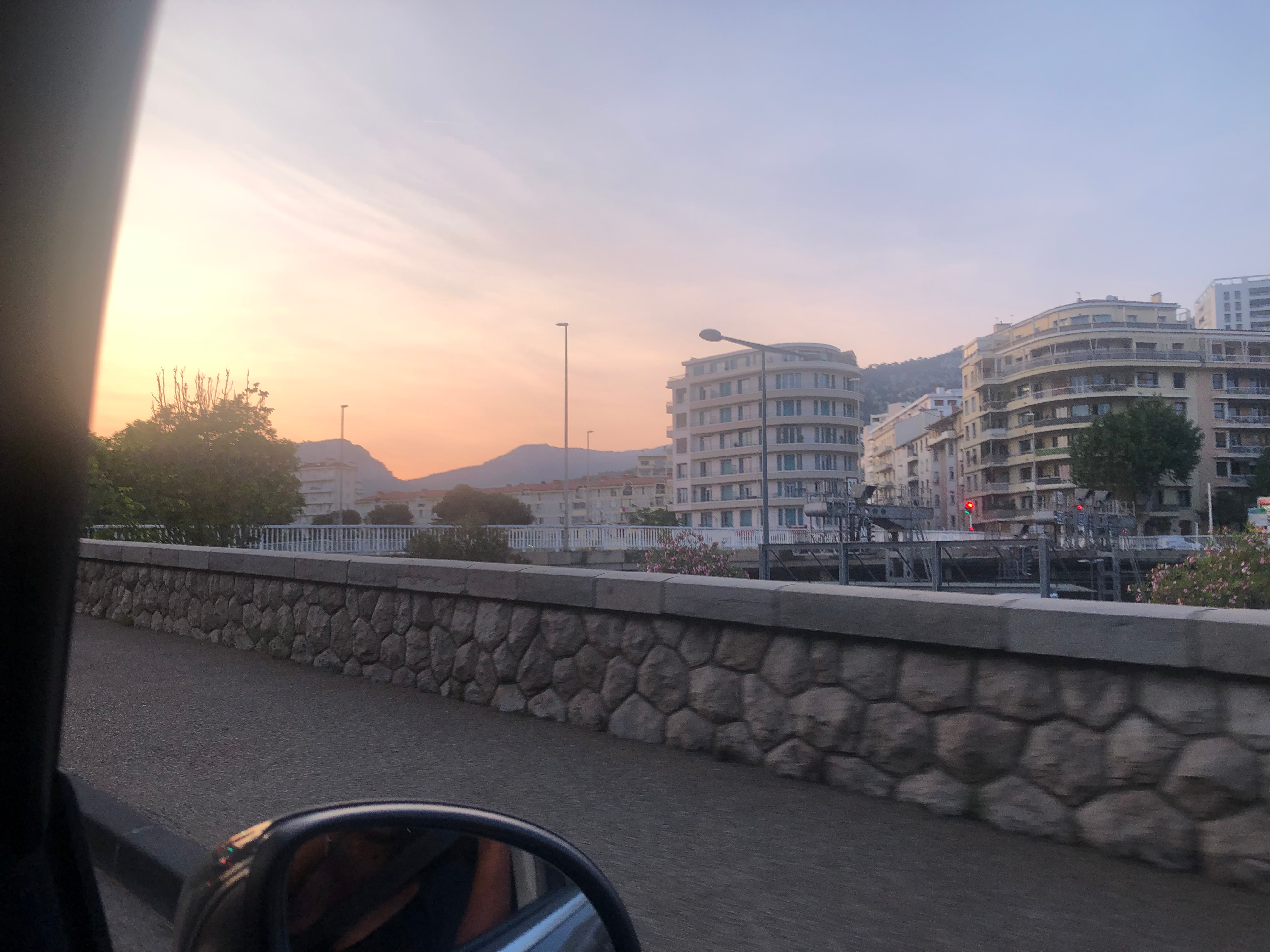
last night my husband and I had a mini date night in too long. It was all very simple; we drove down to the beach and took a walk. The weather was relatively cool for an early summer evening, and we enjoyed scenic views of the mountains that line the shores of Toulon. Walking hand in hand, happy to enjoy the pleasure of one another’s company.
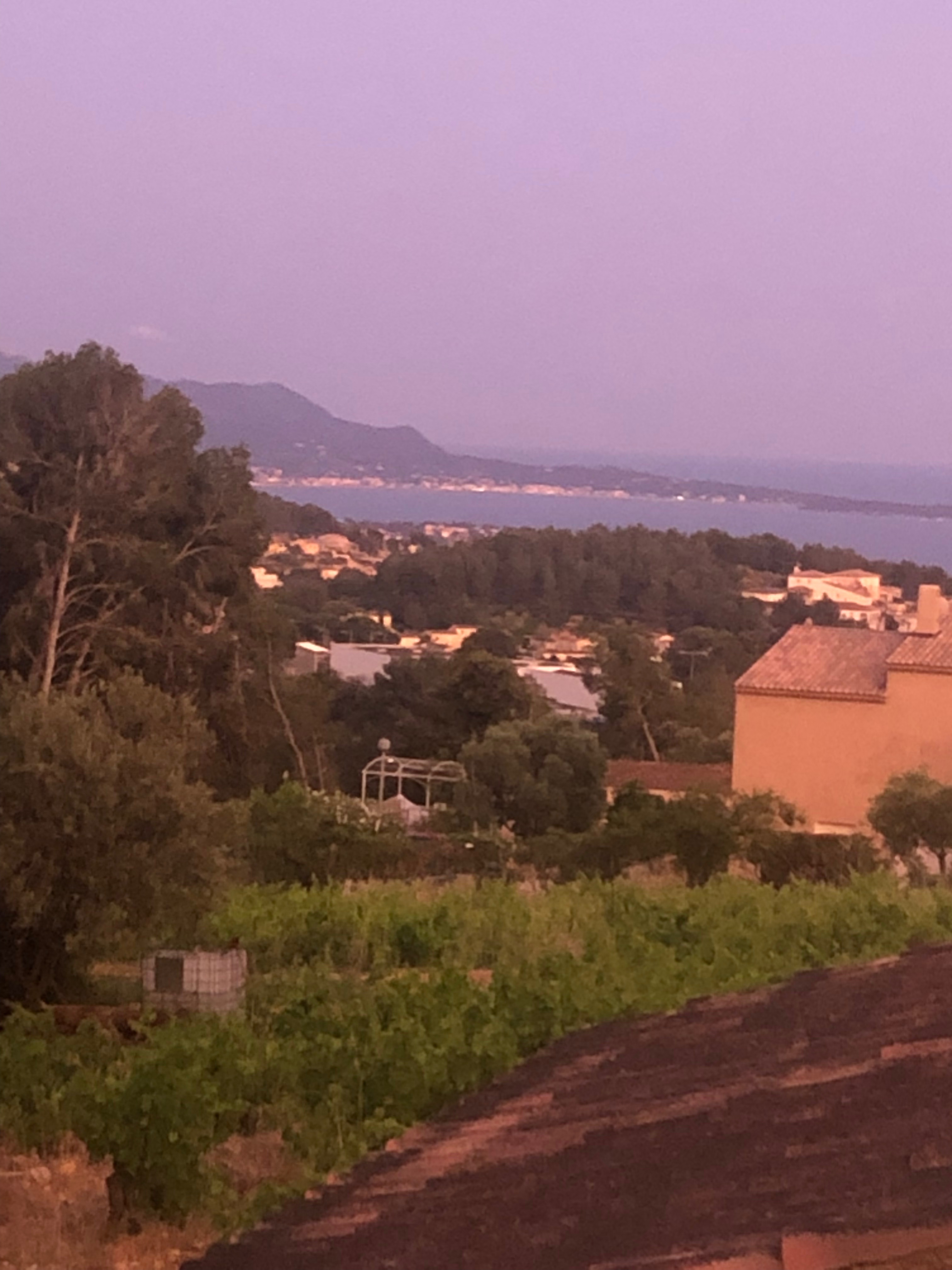
We then walked up the hill and enjoyed an early dinner. Upon returning home I noticed the dazzling colors that descended on our vineyard.
I went to bed relatively early. Waking just in time for my husband to kiss me goodbye before heading off to work at 5:30 AM. I felt incredibly relaxed and recharged it also occurred to me that I had passed the entire evening without a single hot flash and I slept like a log. I felt relaxed and inspired yet on interested in sitting at the computer. Curious I asked my “assistant” to research this phenomenon of and eureka it has a name- the Awe affect.
There’s something soul-stirring about standing barefoot at the edge of the Mediterranean, watching the sky melt into shades of gold, coral, and deep violet. It’s more than beautiful—it’s healing. It’s rewiring. And as someone who left the chaos of New York for a life of love and lavender on a French vineyard, I can tell you: sunsets and saltwater saved me.
But what if I told you there’s actual science behind that transformation?
Let’s break it down, because this magic isn’t just poetic—it’s physiological, neurological, and deeply human.
🌄 Sunsets: Nature’s Daily Reset Button
1. Sunsets Trigger Awe—and Awe Changes You
Studies from UC Berkeley show that awe-inspiring experiences (like watching the sun dip into the sea) shrink the ego and shift us into a more connected, mindful state. You feel more present. Less anxious. More open to change. That’s your brain’s default mode network lighting up—hello, transformation.
2. They Reset Your Inner Clock
The fading light tells your body to start producing melatonin, the sleep hormone. That’s your circadian rhythm getting a gentle nudge to unwind, reset, and restore. Better sleep means better emotional regulation—period.
3. The Colors Literally Elevate Your Mood
Warm hues—reds, pinks, oranges—are scientifically linked to the release of dopamine, your brain’s natural feel-good chemical. It’s like nature’s way of whispering, “You’re safe now. You can exhale.”
🌊 The Mediterranean Sea: Liquid Therapy, Proven by Science
1. The “Blue Mind” Effect Is Real
Marine biologists call it Blue Mind—the calm, focused, meditative state we slip into around water. The Mediterranean, with its slow-rolling waves and infinite blue, activates the parasympathetic nervous system (a.k.a. your calm zone). That means lower blood pressure, slower breathing, and a mind that’s finally quiet.
2. Sea Air Boosts Your Serotonin
Those negative ions floating around in sea air? They actually increase serotonin levels in your brain. That’s the mood-balancing chemical that antidepressants try to mimic. Turns out, just being near the sea can lift your spirits naturally.
3. Saltwater Is a Mineral Bath for Your Nervous System
Mediterranean waters are rich in magnesium, potassium, and calcium. When you swim—or even wade—your skin absorbs these minerals, relaxing your muscles and soothing your nervous system. Magnesium alone has been shown to reduce anxiety and improve sleep.
💫 Why It Hits Harder in Midlife
When you’ve been pushing, striving, surviving for decades, your nervous system gets tired. Sunsets and saltwater aren’t just pretty—they’re medicine for the modern midlife woman. They offer stillness. Sensory healing. And the kind of clarity that says, “You were never too late to begin again.”
✨ From NYC to the Med: My Personal Shift
Trading subway screams for cicadas, deadlines for dusk skies, and burnout for barefoot beach walks wasn’t just a lifestyle upgrade. It was a neurological reset. My brain literally feels different. More at peace. More alive. More… me.
So if you’re standing at the edge of a reinvention, let the Mediterranean hold your hand. Let the sun tuck you in. Transformation doesn’t have to be loud. Sometimes it’s as quiet as the tide.
Read the science: https://ggsc.berkeley.edu/images/uploads/GGSC-JTF_White_Paper-Awe_FINAL.pdf
XO, Thembi Costa Susini
Your girl gone soft, salty & self-aware in the South of France


Leave a comment