
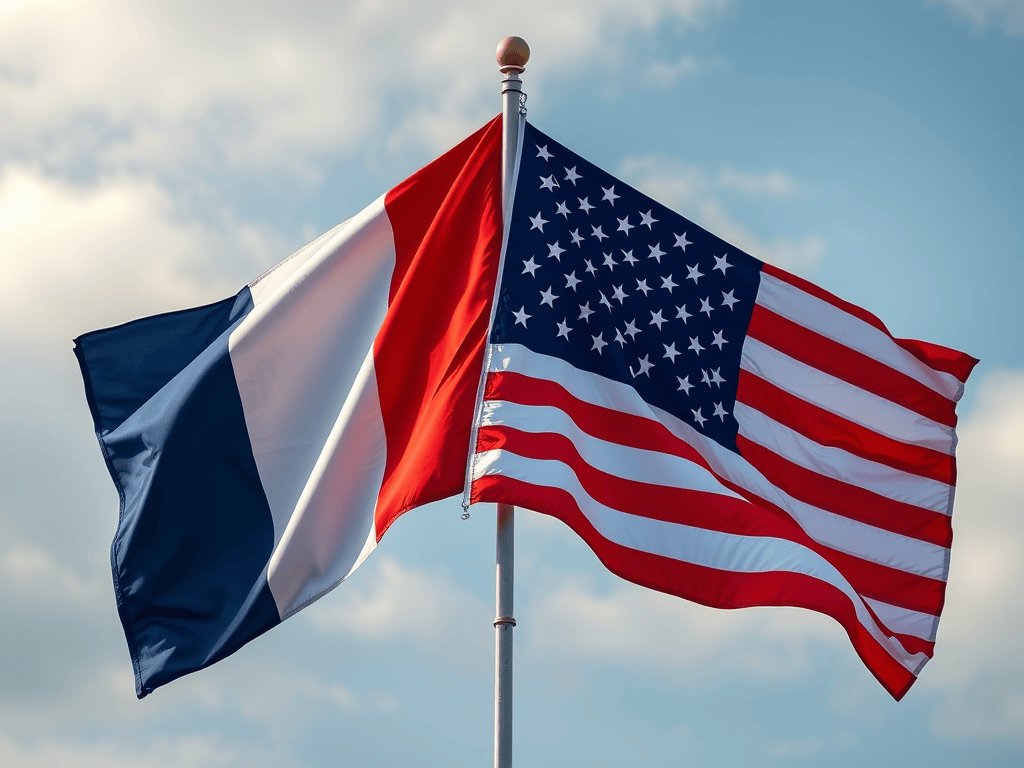
And that feeling out of place? That’s not a weakness It’s a superpower
I am what you might call a cultural code-switcher. I was born and raised in New York City—Harlem/Bronx respectively,—where being direct isn’t rude, it’s efficient. Where walking fast isn’t anxiety, it’s survival. Where speaking your mind isn’t aggressive, it’s Tuesday.
But five years ago, I packed up my Metro mentality and moved to the South of France.
My first week in Aix-en-Provence. I walk into a boulangerie with my signature New York energy—quick, purposeful, ready to get my bread and get out. I march up to the counter and say, “Hi, I’ll take that baguette.”
The baker looks at me like I just insulted his entire bloodline.
What I didn’t realize is that I had committed a cultural cardinal sin. In France, you don’t just walk in and demand bread. You walk in, you say “Bonjour,” you acknowledge everyone in the shop, you inquire about their day, you comment on the weather, THEN you delicately request the honor of purchasing their artisanal creation.
That day, I learned that my New York directness—my cultural operating system—wasn’t so much wrong. But it wasn’t universal.
The Journey
For months, I tried to soft my edge. I slowed my walk, softened my voice, added seventeen “s’il vous plaîts” to every sentence. I wasn’t trying to “be French”, I was just trying, too hard.
But here’s what happened: I became exhausted. Instead of exploring the beauty of Aix-en-Provence, I happily spent many days inside, grateful for the mental break.
I was too polite for New York, too direct for France, and completely disconnected from myself. I was cultural code-switching, but I was switching TO someone else’s code instead of infusing myself.
Then my nature overcame my insecurity. I was at a dinner party in Marseille, and the conversation turned to a topic I’m passionate about—urban planning. I leaned in and spoke with conviction about the differences between maternity leave for new moms in the USA and France.
Click the link below to learn about maternity leave in France,
https://www.service-public.fr/particuliers/vosdroits/F3156?lang=en
The table went quiet. I panicked, thinking I’d done it again—been too much, too intense, too New York.
Then a French architect across the table said, “finally a real discussion.”
The Revelation
That night, I realized I’d been approaching cultural adaptation all wrong.
Cultural code-switching isn’t about becoming someone else. It’s about learning to be authentically yourself in different cultural languages.
Think about it like this: You wouldn’t speak to your grandmother the same way you speak to your best friend, right? You’re the same person, with the same values, but you adjust your delivery. That’s code-switching.
The mistake I made—and that I see many expats, immigrants, and cultural bridge-builders make—is thinking we need to choose between our culture and theirs. Between who we were and who we think we should become.
But what if the answer isn’t either/or? What if it’s both/and?
The Framework
Over the past five years, I’ve developed what I call the Cultural Code-Switching Framework. It has three pillars:
1. Core Identity Anchoring
First, you identify your non-negotiable values—the parts of your cultural identity that make you, you. For me, that’s my New York directness, my efficiency, my ambition. These don’t change based on my zip code.
2. Cultural Translation
Second, you learn to translate these core values into the local cultural language. My directness in France becomes “passionate clarity.” My efficiency becomes “respectful purposefulness.” Same values, different packaging.
3. Contextual Switching
Third, you develop the ability to consciously choose which version of yourself to present based on the context, while never abandoning your core.
At a business meeting in Nice, I bring my full New York energy because competence and clarity are valued in professional settings everywhere. At a neighborhood dinner party, I bring my translated version—still passionate, still direct, but wrapped in more social ceremony.
The Impact
Here’s what happened when I stopped trying to fit in and started learning to code-switch effectively:
I became more successful, not less. My French colleagues started seeking my opinion because they knew I’d give them straight answers. My American friends visiting were amazed at how seamlessly I navigated French social situations.
Because here’s the thing about cultural code-switching—when you master it, you don’t just succeed in new environments. You become a connector. You help others see that different doesn’t mean wrong, just different.
The Bigger Picture
Now, I know what some of you are thinking: “This sounds exhausting. Why should I have to change for anyone?”
And you’re right—you shouldn’t have to change. But you might choose to adapt, and there’s a difference.
Changing means losing yourself. Adapting means expanding yourself.
When I learned to code-switch effectively, I didn’t become less New York. I became more than just New York. I added layers to my identity instead of replacing them.
In the end my experience has made me thankful both for the opportunity to live in France and my native nyc heritage.
The Challenge
Stop trying to fit in. Start learning the art of code-switching.
Don’t abandon your culture—translate it. If you’re an expat, don’t try to become local—learn to be authentically yourself in the local language. If you’re simply someone who feels different wherever you go, understand that your difference isn’t a deficit—it’s your differential advantage.
The world doesn’t need more people who all act the same. The world needs more people who can authentically be themselves across different contexts, building bridges instead of walls.
How would you translate your authentic self into that context? How would you honor both your values and their norms?
That’s your homework. Not to change who you are, but to learn new ways to be who you are.
Because the world needs your New York energy, your Midwest kindness, your Southern warmth, your West Coast innovation—whatever makes you authentically you. We just need to learn to speak those qualities in different cultural languages.
Key Takeaways:
- Cultural adaptation doesn’t require cultural abandonment
- Code-switching is about authentic translation, not personality replacement
- Being a cultural bridge-builder is a valuable skill in our connected world
- Your difference is your differential advantage
- The goal is expansion of self, not replacement of self
Thank you for reading….


Leave a comment