
Five Things I Learned My First Year of Marriage
They say hindsight is 20/20. Looking back at my years as a single woman, I can say with complete honesty: I was a terrible dater — and an even worse picker.
I moved to France in my late 40s with zero intention of dating anyone, least of all a Frenchman. I’d found them, broadly speaking, hormonally overactive and professionally underwhelming. Dating wasn’t on my agenda. Reinvention was. And if I was going to reinvent myself, I was going to do it properly — not by moving to the next city, but by crossing an ocean. For me, any major life change demands the same reserves of resilience, so if I’m going to spend them, I’m spending them on something worth it.
I came here on my own terms. I traveled solo, bought my own flowers, took myself to fine restaurants. I wasn’t easily moved by a lazy text. And honestly? That was both my greatest asset and my earliest lesson.
Here’s what the other side of the Atlantic — and the altar — taught me.
1. Your picker only works when your judgment isn’t clouded by proximity.
Distance has a way of sharpening your instincts. I was perceptive about almost everything I wasn’t emotionally entangled in. But up close, in the fog of wanting something to work, my judgment was unreliable. I consistently chose emotionally unavailable men — not because I didn’t know better, but because I was too close to see clearly. My entire adult relationship history added up to just under four years across two serious relationships, and in both cases, it was over long before it was officially over. The lesson: if everyone around you can see the red flags except you, that’s not a coincidence. That’s proximity distorting your vision.
2. Know the dance — or at least admit you don’t.
One thing I heard repeatedly from men I dated: “I can’t tell if you like me.”
My response was always the same: “I don’t know you yet, so how would I know?”
I have what I’d generously call a black-and-white personality. Gray areas exhaust me. The push-pull of early dating — not too much too soon, not too little too late — felt like a performance I had no interest in rehearsing. What I didn’t fully understand at the time was that my refusal to perform in the gray area was being read as indifference. I wasn’t indifferent. I was just already whole. But I hadn’t yet learned how to signal warmth without losing myself. That’s a skill. It takes practice. I didn’t have it then.
3. Being good on your own is the foundation of being good together.
My husband says it simply: “If you’re good, I’m good.”
This is the sentence that holds our marriage together.
Because I had spent years learning to enjoy my own company — genuinely, not as a consolation prize — I came into this relationship without the hunger that makes people desperate and demanding. I wasn’t looking to be completed. I was already full. And that fullness meant I wasn’t competing with his time, his space, or his independence. When you know how to optimize solitude, you stop resenting your partner for simply being a separate person with their own life. That resentment, I’ve seen, is quietly corrosive. Knowing yourself, enjoying yourself, and not needing to be entertained at all times is not just self-care — it is the infrastructure of a healthy marriage.
4. Your circle reflects you both — choose accordingly.
Marriage changes your social calculus in ways no one warns you about. You’re no longer just curating your own circle; you’re co-curating a shared world that reflects your union.
We learned this lesson through a connaissance — an acquaintance invited out of simple kindness — who made it a point to announce, at our intimate gathering of twenty close friends and family, that she was actively in search of a wealthy husband. It was jarring. And clarifying.
My husband and I cannot afford to be associated with that kind of energy — not out of snobbery, but out of alignment. The people around us reflect our values, our taste, and the life we’re building. I extended grace because, if I’m honest, I recognized something in her: a version of the stress-driven, approval-seeking energy I had once carried myself. But grace has limits. And curating your circle is not cruelty — it’s integrity.
5. You can love someone and still not yet be ready for them.
This is perhaps the most humbling thing I’ve come to understand.
I discovered, over the course of this first year, that I had arrived at marriage without all the tools needed to sustain it — let alone to sustain it with a man as loving and loyal as mine. That’s not a failure. It’s just true. And knowing it is what keeps me from taking any of it for granted.
My husband once mentioned, almost offhandedly, that if I had come to him carrying the energy of the connaissance — frantic, grasping, performing — we never would have found each other. I believe him. I also believe that at some earlier point in my life, I was carrying something uncomfortably close to that energy. The move, the reinvention, the years of intentional solitude — they didn’t just change my address. They changed my frequency.
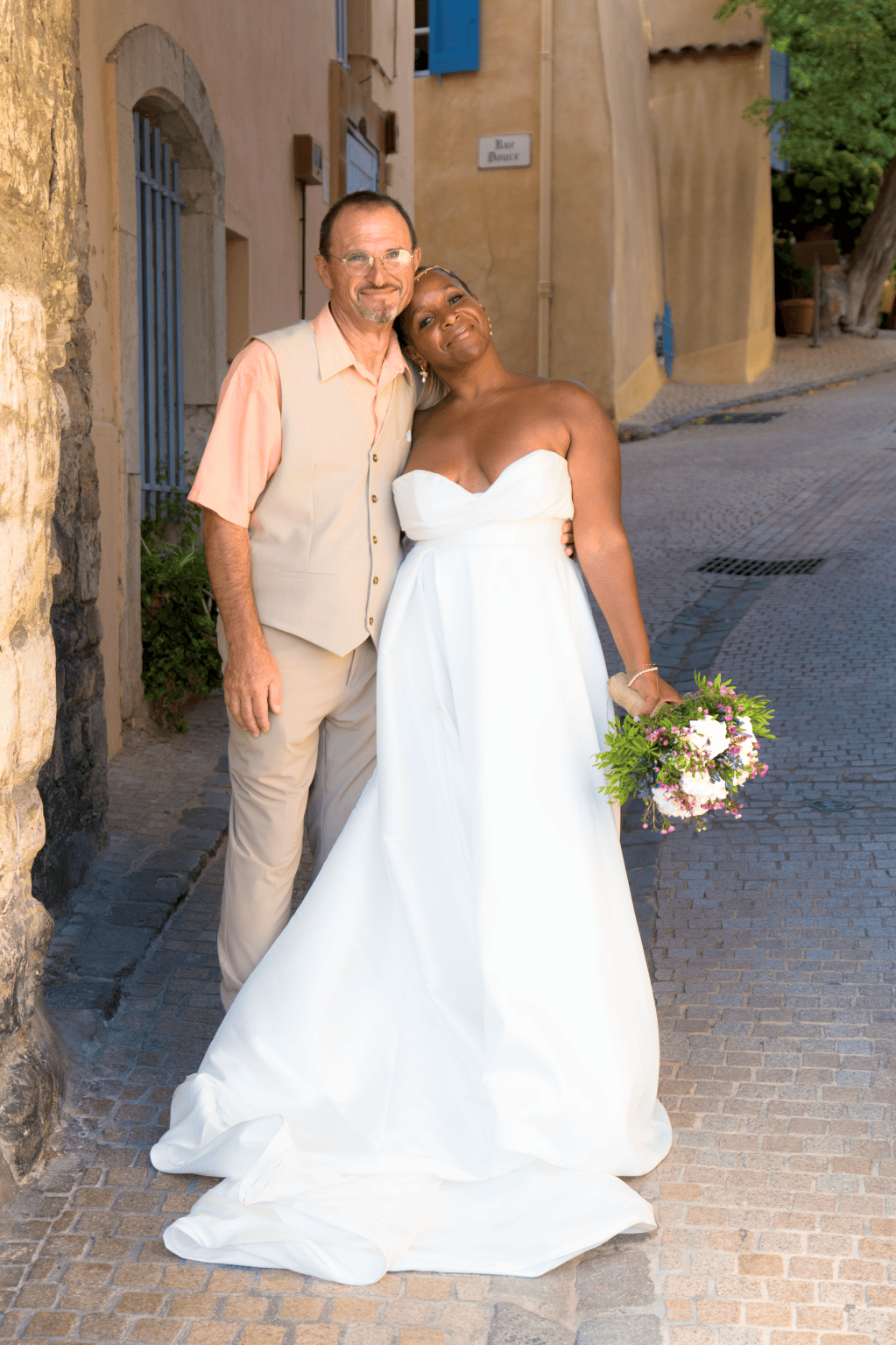
The woman who crossed that ocean, content in her own skin, unhurried and unimpressed by half-hearted gestures, was the woman he found. Staying in the present is how we came together. Staying in the present is how we stay together.
Soft living isn’t about luxury — it’s about no longer making life harder than it needs to be. And sometimes, the softest, bravest thing you can do is wait until you’re actually ready.


Leave a comment