
I’m beginning to understand why menopause can feel so destabilizing—and it has very little to do with gray hair, expanding waistlines, or changing skin.
The most difficult changes have been the ones no one can see.
It’s the exhaustion that settles into your bones. The brain fog that makes it difficult to concentrate. The frustration of sitting in front of a computer, knowing exactly what you want to accomplish, but feeling as though your mind and body are operating on different timelines.
I’m fortunate in many ways. I have the ability to work from home while building my brand. I have the freedom to create, write, and share my experiences on my own terms.
Yet the last few weeks have been particularly challenging.
Despite meeting every benchmark, I continue to face rejection when it comes to monetization. Knowing that there may be no immediate financial reward for work I’ve already invested hundreds of hours into can be deeply discouraging. Some days it feels as though I’m feeding an algorithm crumbs while hoping for a harvest that may never come.
And yet, if I stop now, I’ll never know what could have been.
So I keep going.
I continue creating. I continue learning. I continue showing up.
The truth is that I’m tired in a way I have never experienced before. Not just physically tired, but mentally drained. The kind of fatigue that makes it difficult to think clearly or maintain momentum.
What keeps me moving forward is the belief that this chapter is temporary.
I am holding on for the day when I feel fully in command of my energy again. For the day when my body feels more familiar, my creativity flows more freely, and my work begins to generate the opportunities I’ve envisioned.
But menopause has also given me a new perspective on relationships—especially relationships in midlife.
I understand now why so many people, not just women, choose to remain single later in life.
Midlife brings enormous changes. Women experience hormonal fluctuations that can affect mood, energy, sleep quality, memory, and concentration. During menopause, declining estrogen and progesterone levels influence multiple systems throughout the body, often resulting in fatigue, cognitive changes, and emotional volatility.
Men face their own physiological transitions. While not as abrupt as menopause, age-related declines in testosterone can contribute to reduced energy, changes in body composition, lower libido, and shifts in mood.
When both partners are navigating significant physical and emotional changes simultaneously, maintaining connection requires patience, communication, and grace.
Add decades of raising children, supporting careers, caring for aging parents, and managing household responsibilities, and it’s not surprising that many couples begin to reassess their lives once those responsibilities begin to lessen.
Sometimes they discover they have grown together.
Sometimes they discover they have grown apart.
Researchers have documented a significant increase in what is often called “gray divorce”—divorce occurring after age 50. In the United States, the divorce rate among adults over 50 doubled between 1990 and 2010, and today more than one-third of divorcing adults are over the age of 50.
These statistics don’t necessarily reflect failed marriages. In many cases, they reflect people asking themselves difficult questions about identity, fulfillment, purpose, and how they want to spend the decades that remain.
For me, however, midlife has brought a different realization.
I’ve spent much of my life betting on myself.
Leaving New York.
Starting over in France.
Returning to university at 47.
Building a new career.
Finding love.
Getting married for the first time at 50.
Life has rewarded me again and again for having the courage to take chances on myself.
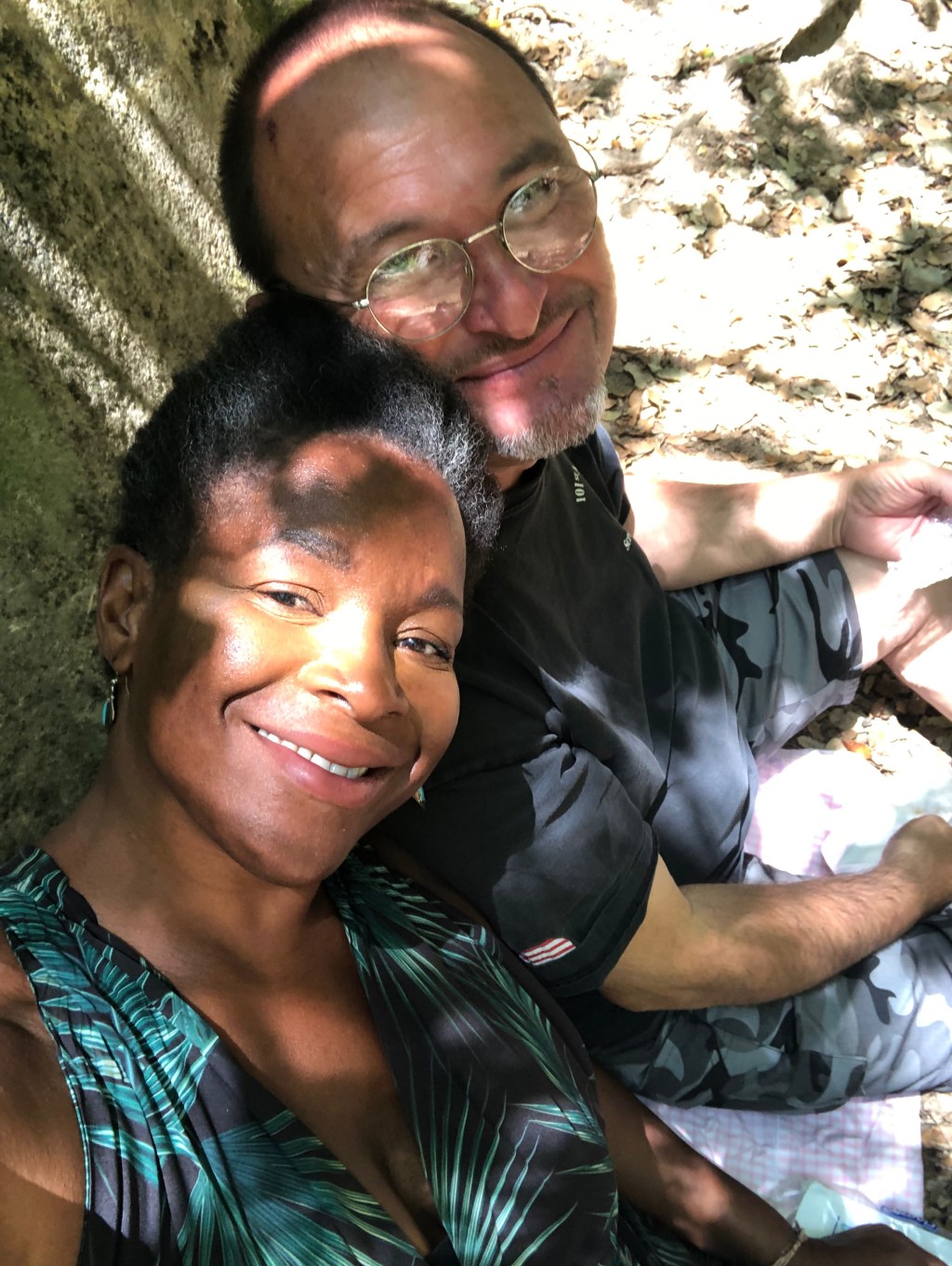
But now there is someone standing beside me.
Someone who believes in me on the days when I struggle to believe in myself.
Someone who is proud of me—not because of what I’ve accomplished, but because of who I am. Someone who makes me feel beautiful on my worst days.
And strangely enough, that doesn’t make me want to slow down.
It makes me want to reach even further.
Knowing that I am loved exactly as I am inspires me to become an even better version of myself—not out of obligation, but out of gratitude.
Not because I need to prove my worth.
Because I want to build something meaningful for both of us.
Menopause may be teaching me lessons about aging, patience, and resilience.
But perhaps its greatest lesson is this:
The goal isn’t to become the woman I used to be.
The goal is to become the woman I’m still becoming.
What’s been the biggest surprise about midlife?
- Changes in my energy
- Changes in my body
- Changes in my relationships
- Changes in what I want from life
“I thought midlife would be about physical changes. Instead, I’ve been surprised by how much my priorities, energy, and outlook have shifted. What has surprised you most?”


Leave a comment